The talk people come up afterwards about.
Not during the questions. Afterwards, quietly, once the room has thinned out. Most wellbeing speakers are booked to reassure a room. I am booked when a board would rather be told the truth.
"Something on wellbeing, quite upbeat, about thirty minutes."
Which produces a talk everybody agrees with, nobody acts on, and no one remembers by lunch.
"Say the thing we are all thinking and none of us will say first."
That is the talk I give. It is not bleak, but it does not pretend either, and the conversations it starts continue long after the session.
Platforms
- TEDxTruro
Organiser and speaker coach
Coached speakers on content, structure and delivery, including Fatma Sabet ahead of her Wellcome Trust Fellowship talk.
My TEDx talk preparation with Craig was transformative. It marked the beginning of my journey as a public speaker who speaks from the heart.
Fatma Sabet - Institute of Directors
Speaker and facilitator
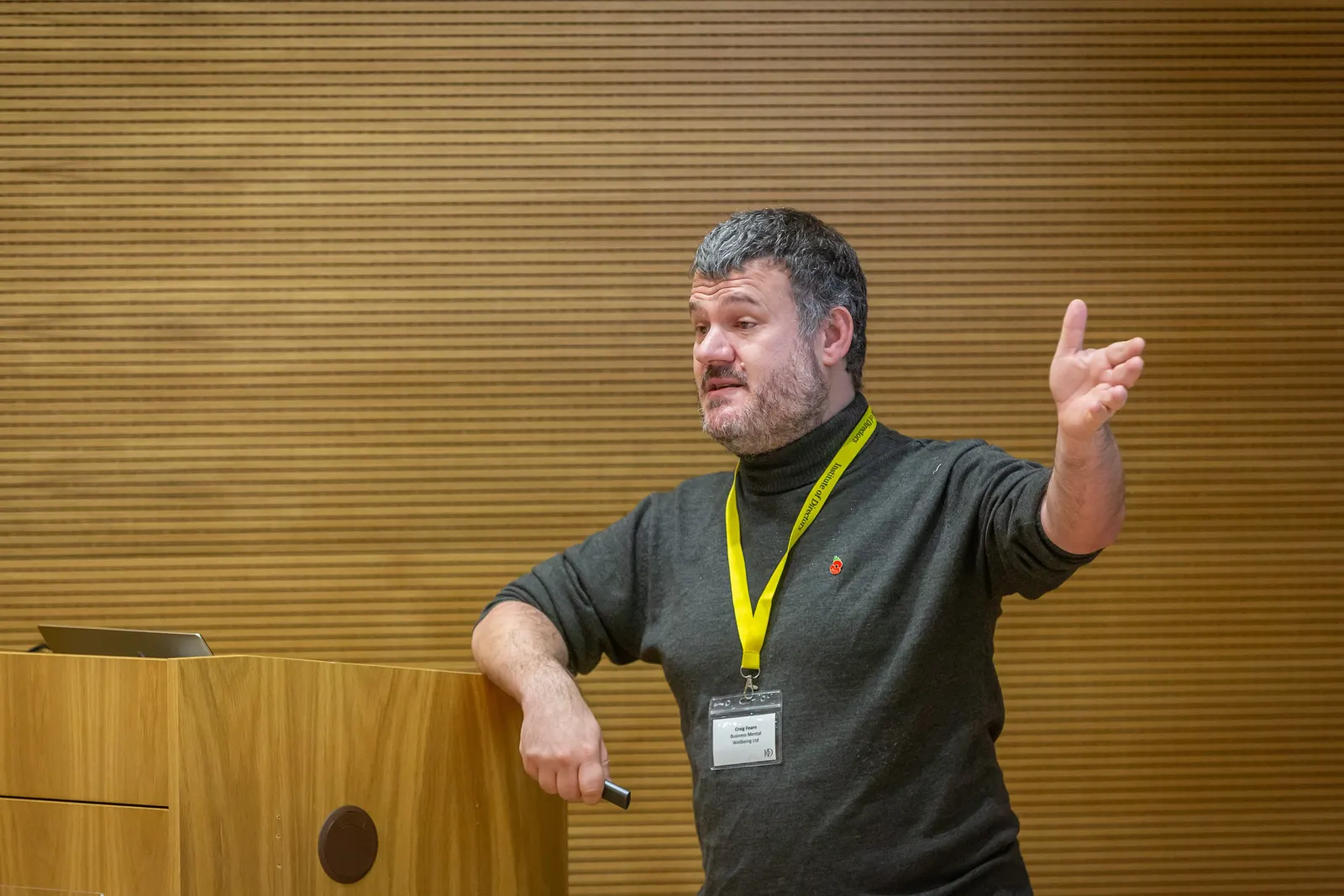
Sessions on boardroom wellbeing, leadership resilience, and saying the unsayable at director level. Built and ran a monthly IoD member group for over two years.
Craig has started and sustained a local IoD member networking group meeting monthly for almost two years. He has built strong engagements with local communities.
Steve Hill, IoD - Stevie Awards
International judge
Judging executive leadership, corporate governance and organisational culture entries for the International Business Awards.
Four talks, all of them the same argument
That the cost of senior people having nowhere to be honest is paid by the organisation, in decisions rather than in sick days. Pick whichever framing your audience will sit still for.
-
Loneliness at the top
Why the people best placed to help a senior leader are the people they can least afford to tell. The talk most audiences go quiet during.
-
ROI against VOI
Wellbeing spending measured the way a finance director measures things, and what the usual numbers quietly leave out.
-
Governance as a wellbeing lever
For boards: the decisions that determine whether people burn out are mostly made in rooms that never discuss wellbeing.
-
Lessons from mining, banking and higher education
What transfers across sectors, what does not, and the mistake of assuming the pressures are the same everywhere.
Tell me who is in the room and what you need them to leave thinking.
Keynotes, panels, fireside chats and closed board sessions. I will say if I am the wrong person for your audience.
Enquire about speaking